Buying a car is exciting, but choosing the right car insurance often gets ignored or rushed. Many car owners focus only on getting the car home and treat insurance as a formality. This is where most mistakes happen.
Car insurance is not just a legal requirement. It is a financial safety net. A small mistake while buying insurance can lead to claim rejection, high repair costs, or unnecessary expenses later. Below are some of the most common mistakes car owners make while buying car insurance—and how you can avoid them.
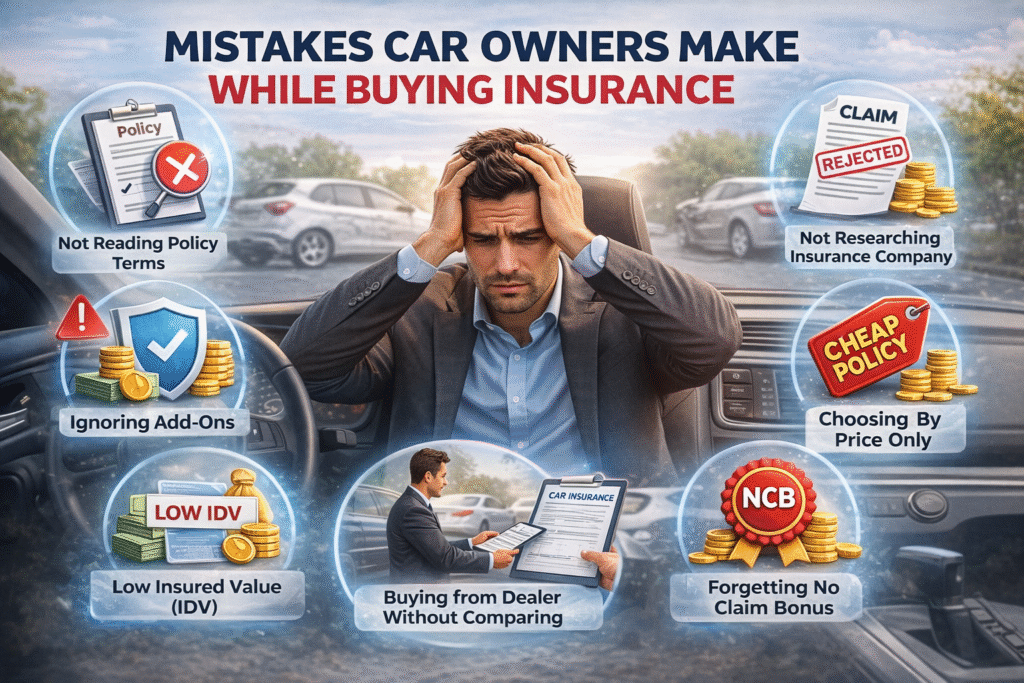
1. Ignoring the Budget Planning
Many car owners buy insurance without deciding how much they can actually afford every year. They either choose the cheapest policy or overspend on unnecessary add-ons.
Insurance should fit your budget and your car’s value. If the premium feels heavy every year, you may end up skipping renewals later. On the other hand, choosing very low coverage just to save money can be risky.
Always plan a realistic insurance budget before selecting a policy.
2. Skipping Proper Research
One of the biggest mistakes car owners make is buying insurance from the first agent or website they see. Insurance plans differ widely in coverage, benefits, exclusions, and claim service.
Without research, you may miss:
- Better coverage at the same price
- Faster claim settlement insurers
- Useful add-ons
Spending even 20–30 minutes comparing policies can save you money and trouble in the long run.
3. Choosing Insurance Only Because the Dealer Suggested It
Many car buyers simply accept the insurance offered by the car dealer for convenience. While dealer insurance is easy, it is often more expensive and less flexible.
Dealers usually partner with limited insurers and may not offer the best plan for your needs. You are always free to buy insurance from outside providers.
Compare first. Decide later.
4. Not Understanding What the Policy Covers
A very common mistake is assuming that “everything is covered.” In reality, every car insurance policy has exclusions.
Some damages may not be covered unless you choose specific add-ons. If you don’t understand what your policy includes, you may face surprises during claims.
Always read:
- What is covered
- What is not covered
- Claim conditions
Clear understanding avoids disappointment later.
5. Ignoring Safety Features While Buying Insurance
Many modern cars come with safety features like airbags, ABS, parking sensors, and anti-theft devices. These features can reduce insurance premiums.
Car owners often forget to inform insurers about these features. As a result, they miss out on discounts they are eligible for.
Always declare all safety features correctly while buying or renewing insurance.
6. Choosing the Wrong IDV (Insured Declared Value)
Some car owners intentionally lower the IDV to reduce the premium. While this saves money upfront, it reduces the claim amount if the car is stolen or completely damaged.
IDV should reflect the realistic market value of your car. Setting it too low can lead to heavy losses during major claims.
A balanced IDV is always the smart choice.
7. Ignoring Add-Ons Completely
Many people skip add-ons thinking they are unnecessary. While not all add-ons are required, some are extremely useful.
Add-ons like:
- Zero depreciation
- Engine protection
- Roadside assistance
can save you a lot of money during repairs. Skipping all add-ons just to reduce premium is a common mistake.
Choose add-ons based on your driving conditions and car value.
8. Forgetting About Long-Term Maintenance Costs
Insurance decisions should not be made only for today. Car repair costs increase as the car ages, especially for premium or feature-rich vehicles.
If you plan to keep your car for many years, strong coverage becomes even more important. Weak insurance may work in the first year but cause problems later.
Think long-term when selecting coverage.
9. Falling for Discounts and Offers Without Reading Details
Discounts are attractive, but they can sometimes hide reduced benefits. Some offers look good but come with higher deductibles or limited coverage.
Always check:
- Why the premium is lower
- What benefits are missing
- Whether the discount affects claim payouts
A cheap policy is not always a good policy.
10. Not Comparing Claim Settlement Support
Many car owners focus only on premium price and forget about claim service quality. A policy is truly tested only during a claim.
Poor claim support can mean:
- Delays
- Repeated document requests
- Partial settlements
Check customer reviews and claim settlement reputation before choosing an insurer.
11. Forgetting to Transfer No Claim Bonus (NCB)
When switching insurers or buying insurance for a new car, some owners forget to transfer their No Claim Bonus. This leads to paying higher premiums unnecessarily.
NCB is your reward for safe driving. Always ensure it is transferred correctly during renewals or insurer changes.
12. Not Reading the Fine Print
This is one of the most ignored steps. The fine print contains important details about exclusions, deductibles, and claim rules.
Many claim rejections happen simply because the policyholder was unaware of a condition mentioned in the policy document.
Take time to read it once. It can save you a lot later.
13. Buying Insurance in a Hurry
Insurance should never be a last-minute decision. Buying in a rush increases the chances of mistakes, wrong coverage, or missing benefits.
Plan your insurance purchase calmly, just like you plan buying the car itself.
Final Thoughts
Buying car insurance is not just about following the law—it is about protecting your money, your car, and your peace of mind.
Most mistakes happen because of lack of awareness, hurry, or over-trust. Avoid these common errors, choose wisely, and make sure your insurance truly works for you when you need it most.
A smart car owner doesn’t just buy a car — they protect it the right way.